Vestige-The Warm_2025_Moving Image
Duration: 17:46_Real-time environments produced in Unreal Engine 5
Sound collaboration: Damir Avdić
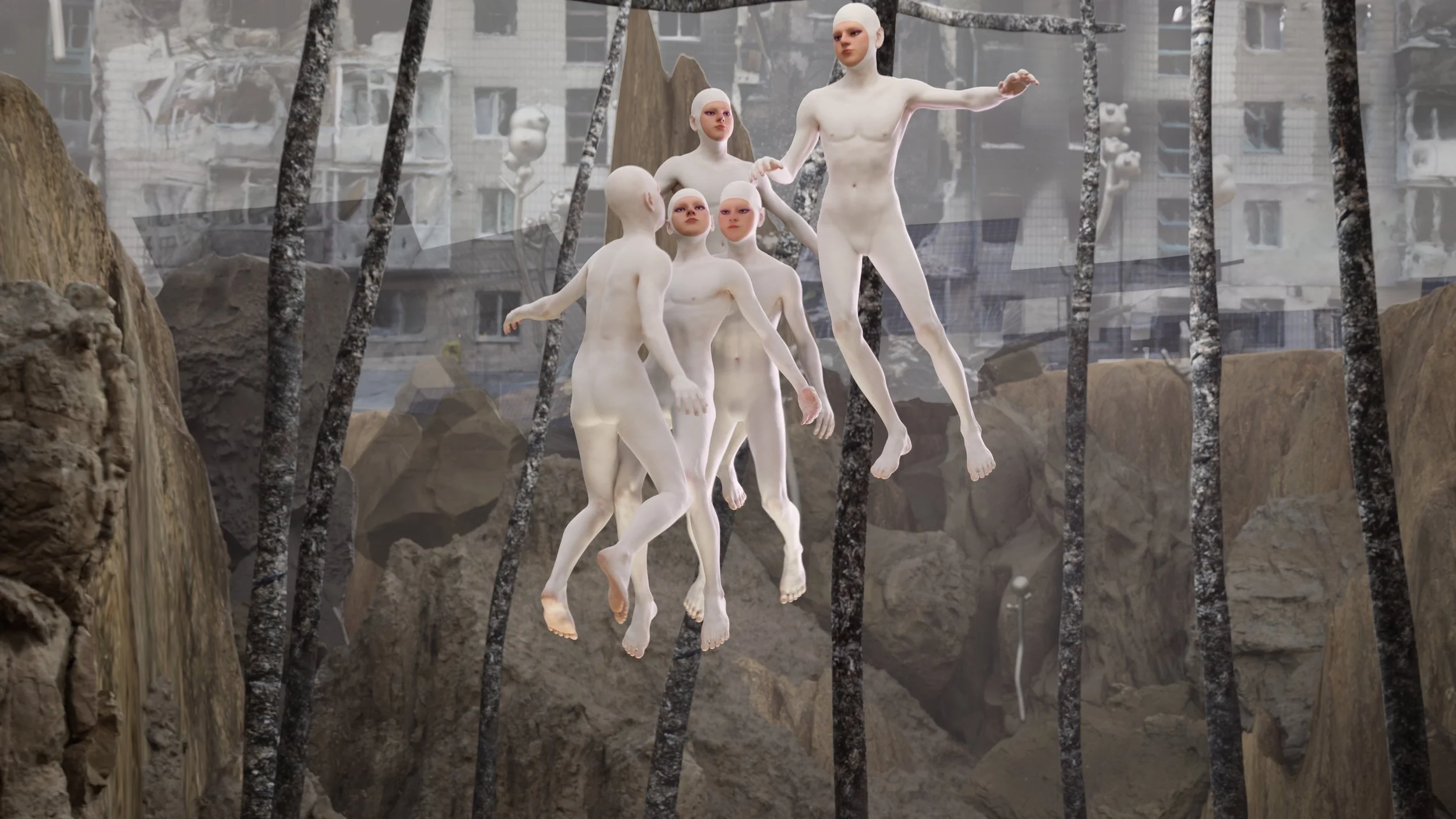
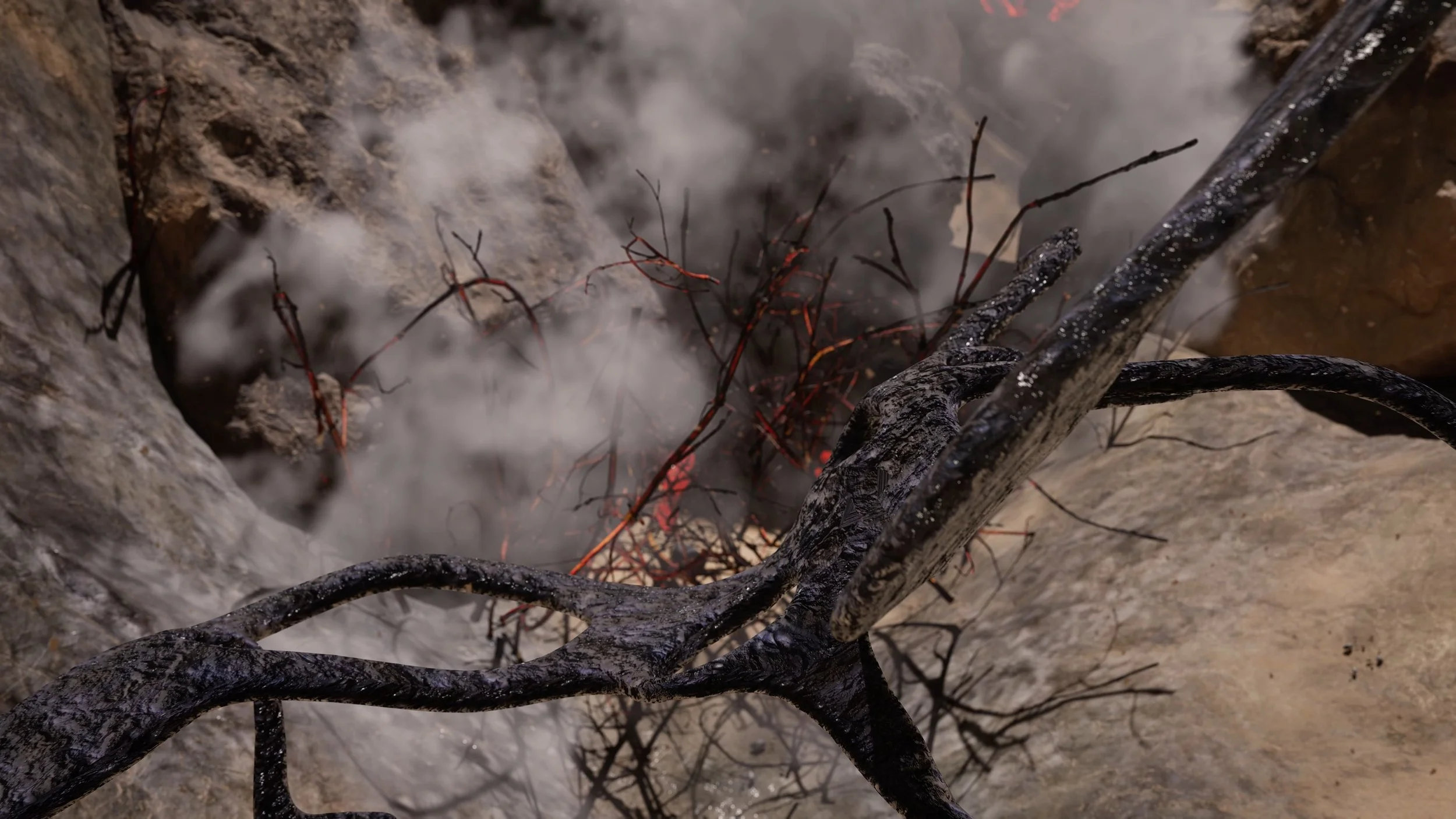
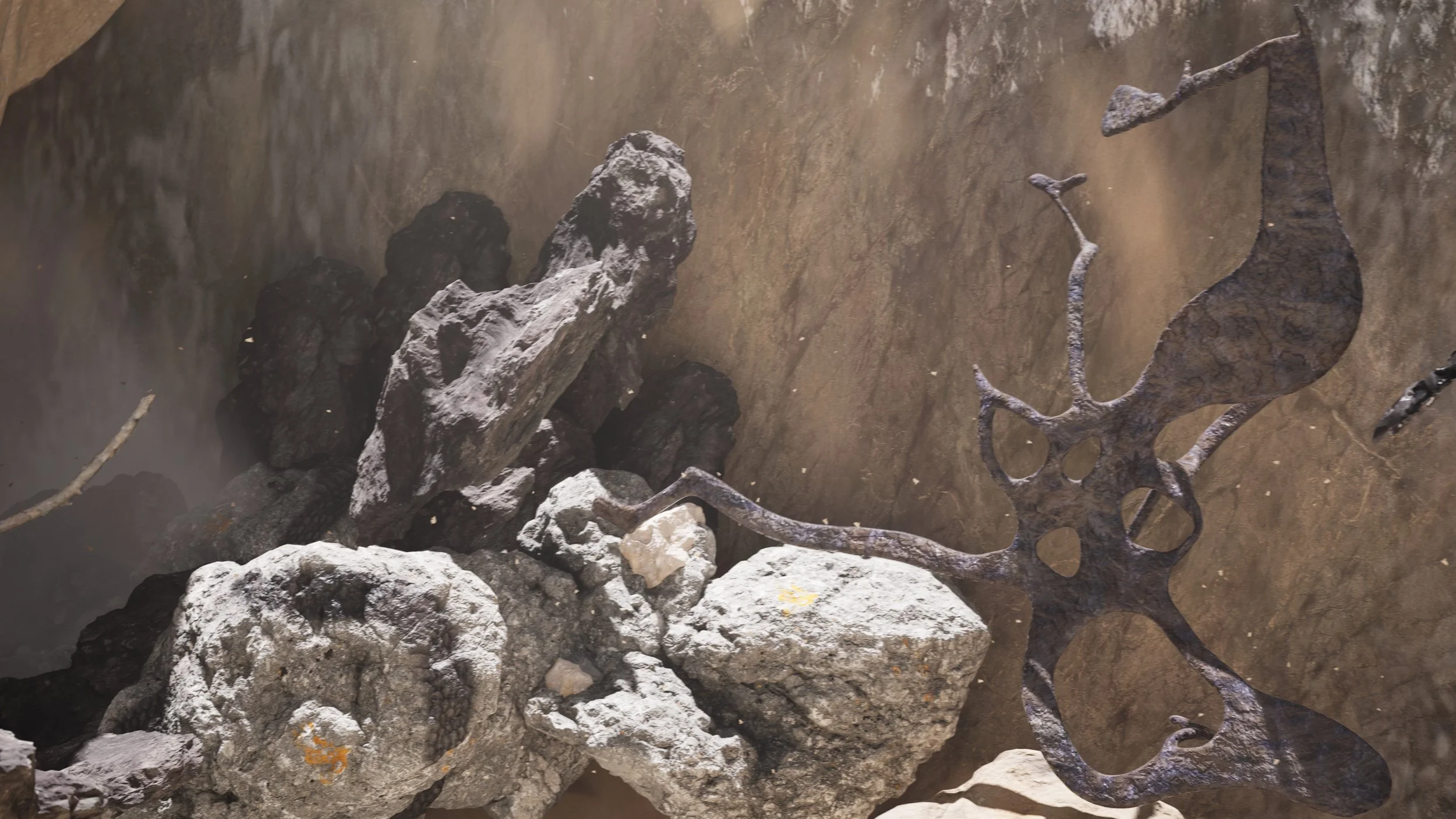
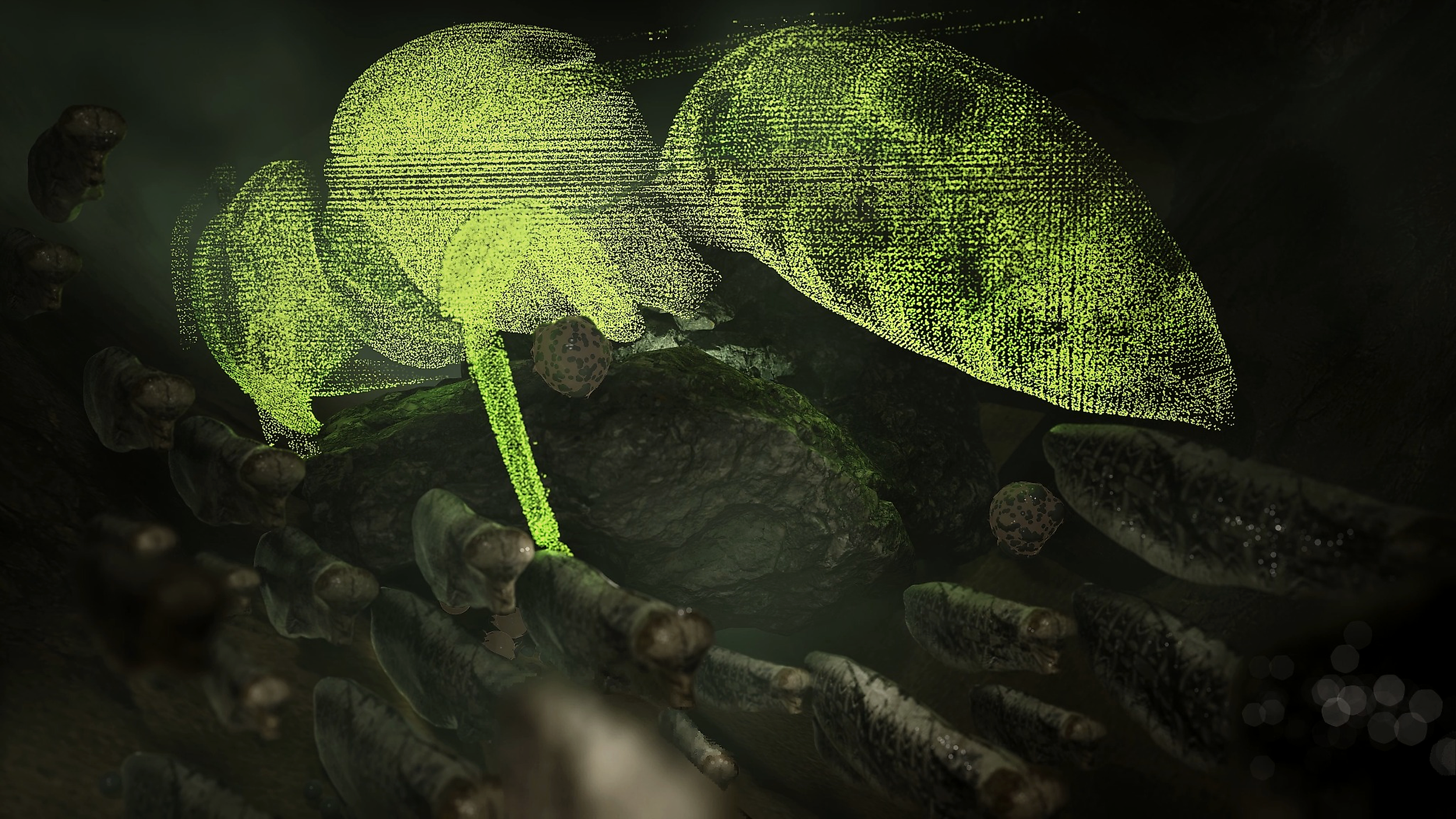
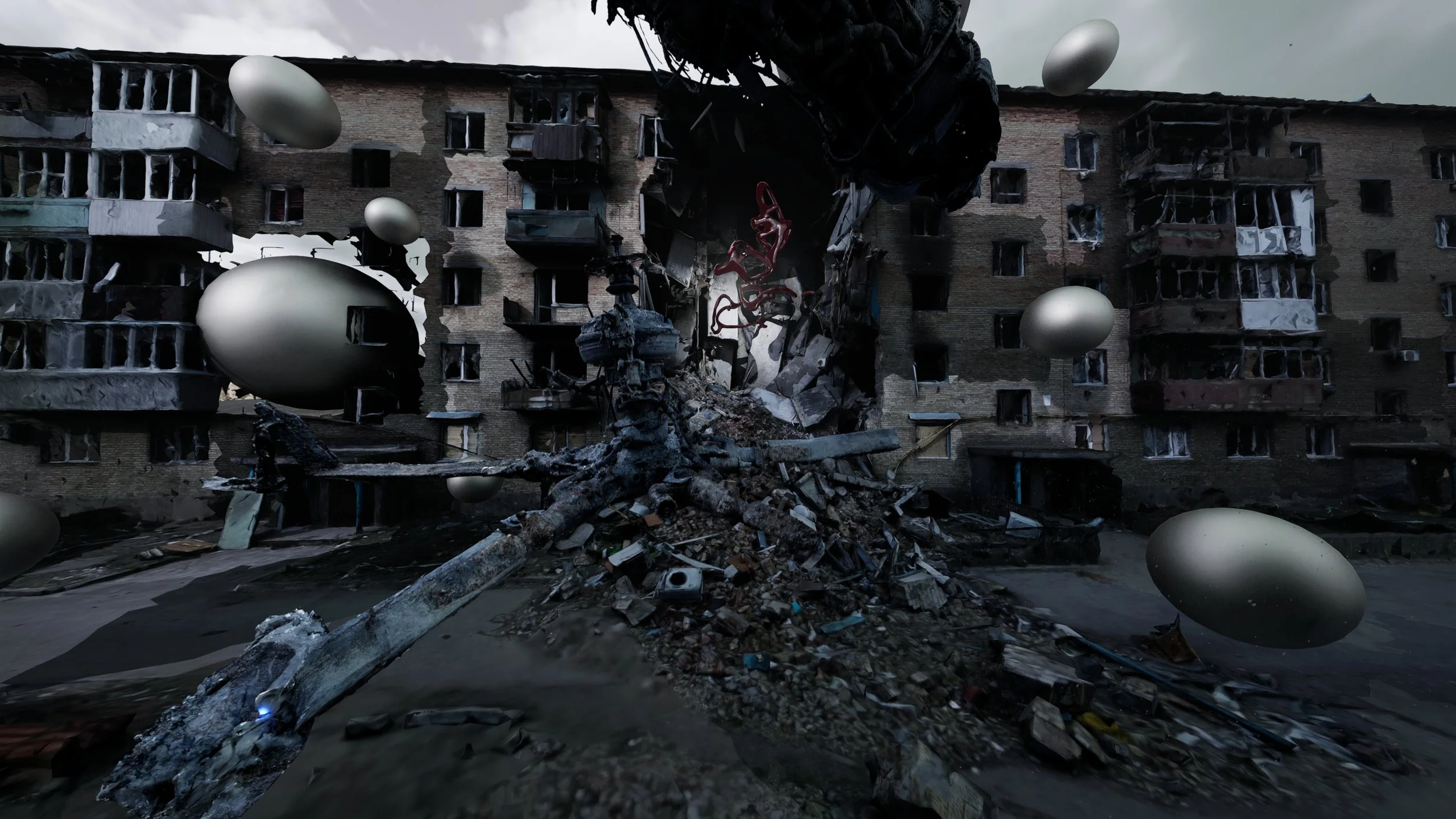
Vestige – The Warm is a moving-image work situated between experimental film, digital animation, and installation-based media art. Developed using real-time technologies, the project explores landscapes shaped by destruction, ecological overheating, technological mediation, and the unstable memory of environments exposed to crisis.
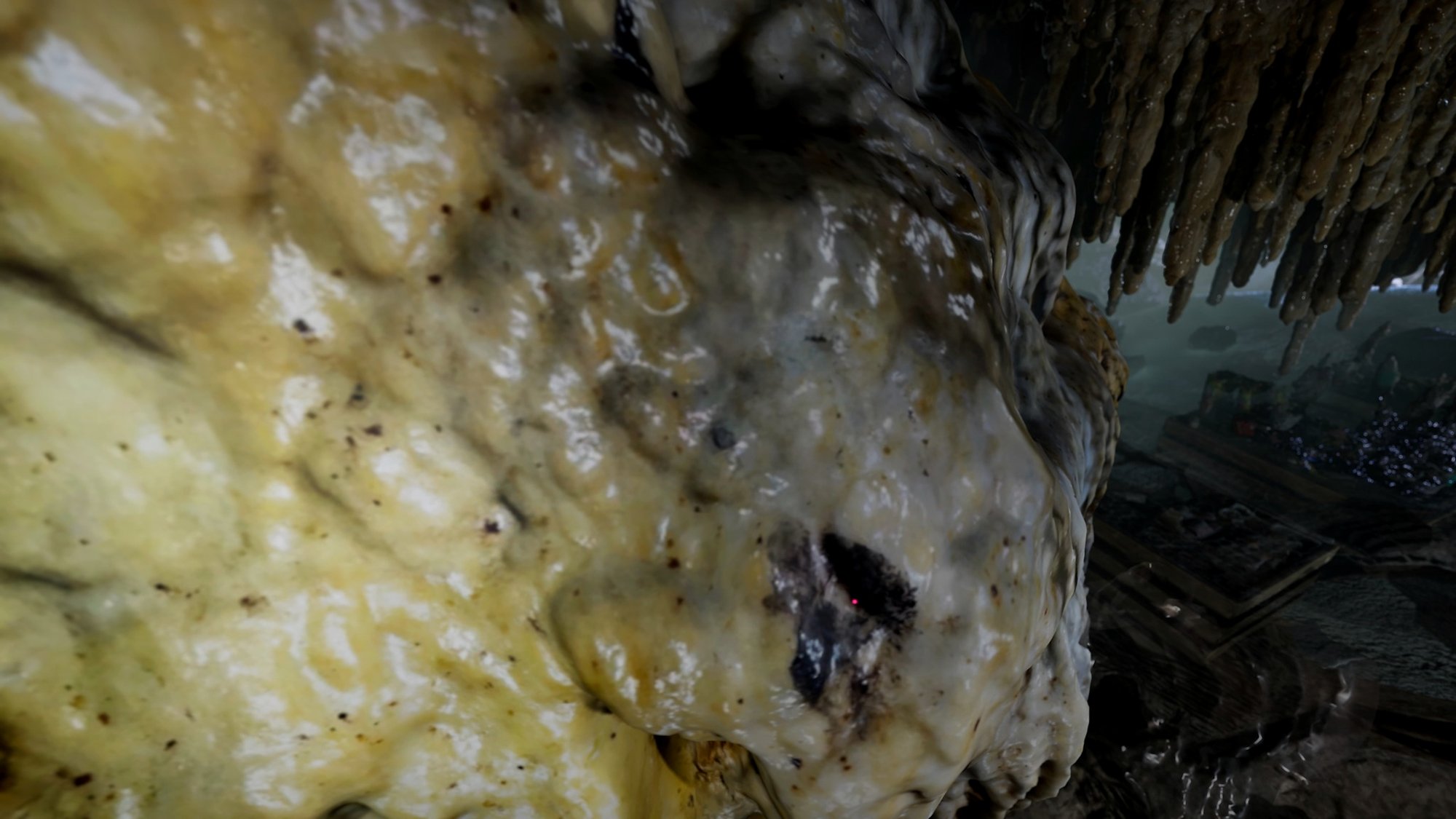
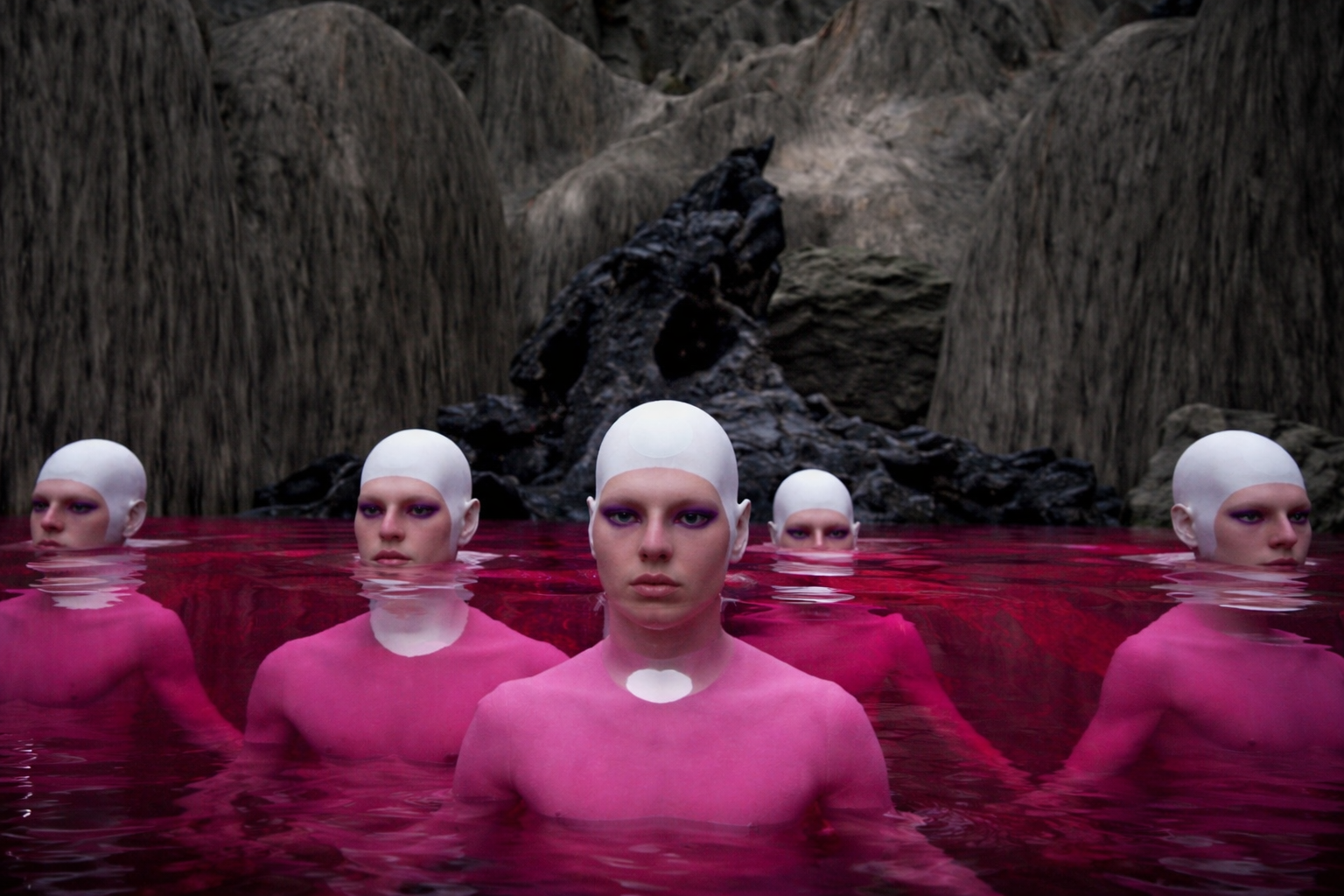
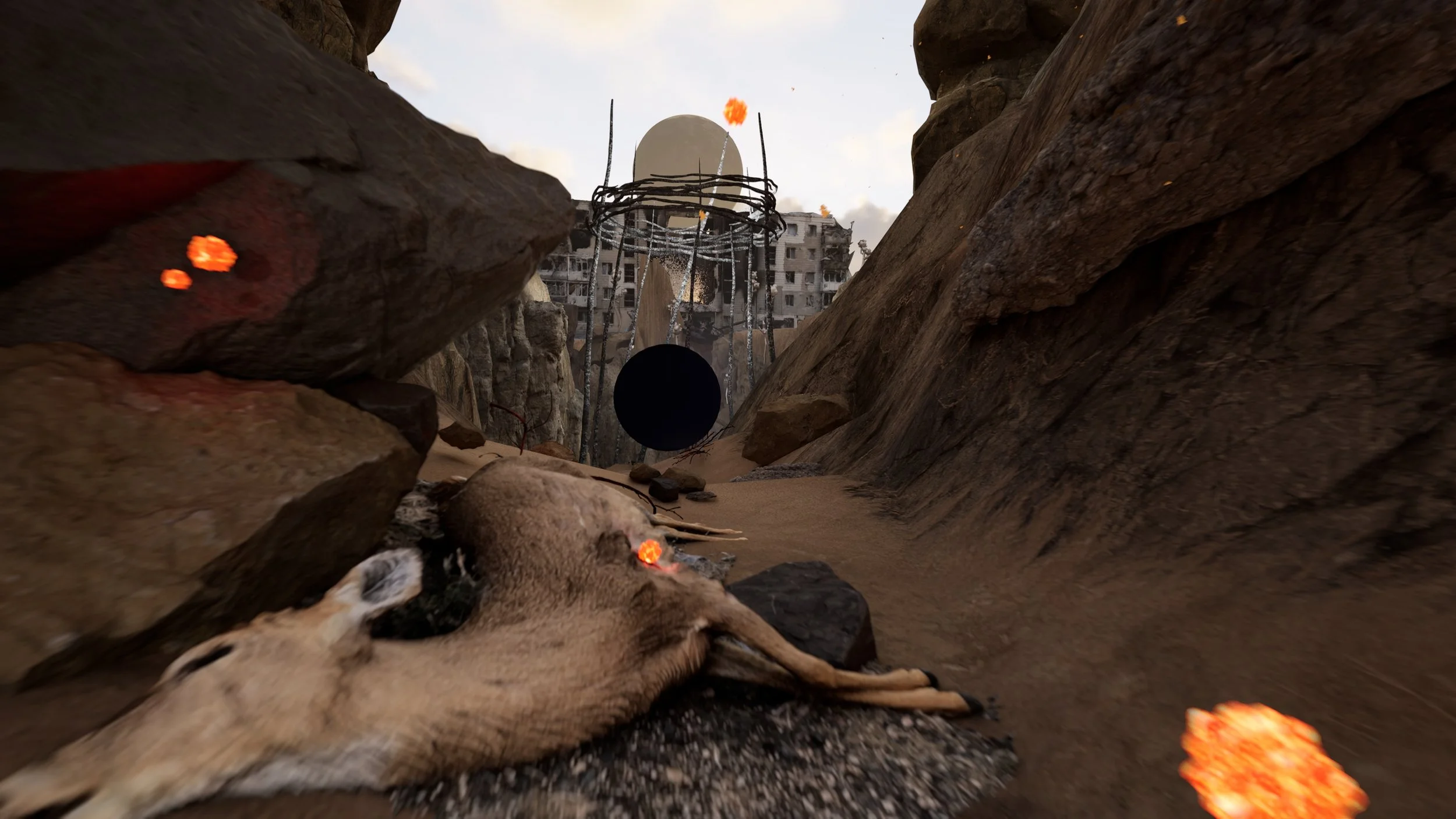
The film unfolds through a continuous cinematic movement across digitally constructed landscapes composed of architectural fragments, damaged interiors, debris, scorched terrain, geological formations, and reconstructed spaces. These environments do not function as direct documentary representations, but as speculative terrains in which traces of ecological collapse, geopolitical violence, and digital reconstruction overlap.
Rather than following a linear narrative, the work relies on duration, spatial movement, and immersion as its primary compositional principles. The camera drifts through unstable environments where fragments of architecture, objects, bodies, and terrain appear suspended between disappearance and persistence. The title refers to this condition: vestiges as remnants of a disrupted world, and warmth not as comfort, but as a sign of planetary overheating, combustion, exhaustion, and irreversible transformation.
In this sense, Vestige – The Warm approaches landscape as a body under pressure. Heat becomes both a material and symbolic force: it burns, melts, displaces, erases, and mutates. The work responds to a contemporary condition in which climate change is no longer perceived as an abstract future, but through increasingly visible ruptures — fires, floods, collapsing ecosystems, glacial instability, and the transformation of once-stable environments into zones of uncertainty.
The project was produced in Unreal Engine 5, combining real-time rendering with AI-assisted transformations of hand-drawn elements developed through the platform Tripo. The sound layer of the work was developed in collaboration with musician Damir Avdić, whose minimal yet intense sonic presence reinforces the atmosphere of tension, pressure, and suspended movement within the environments.
By translating traces of destruction into synthetic environments, Vestige – The Warm positions the digital image as a space where documentation, fiction, and ecological memory converge. The work questions how contemporary technologies shape the perception of crisis, and how digital landscapes can carry the residues of a world marked by environmental exhaustion, thermal violence, and post-human uncertainty.