Transmedia Fantastical Storytelling
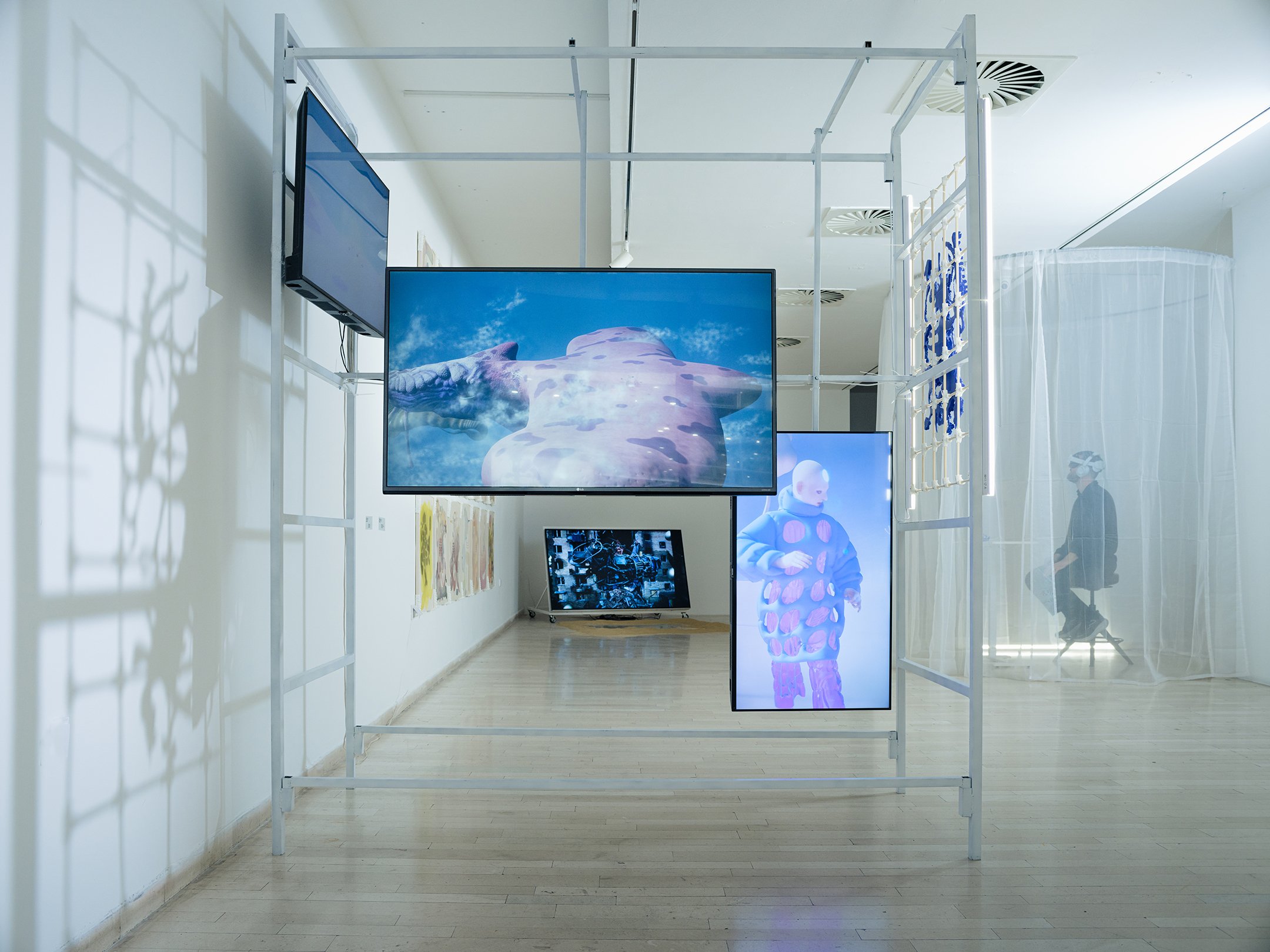
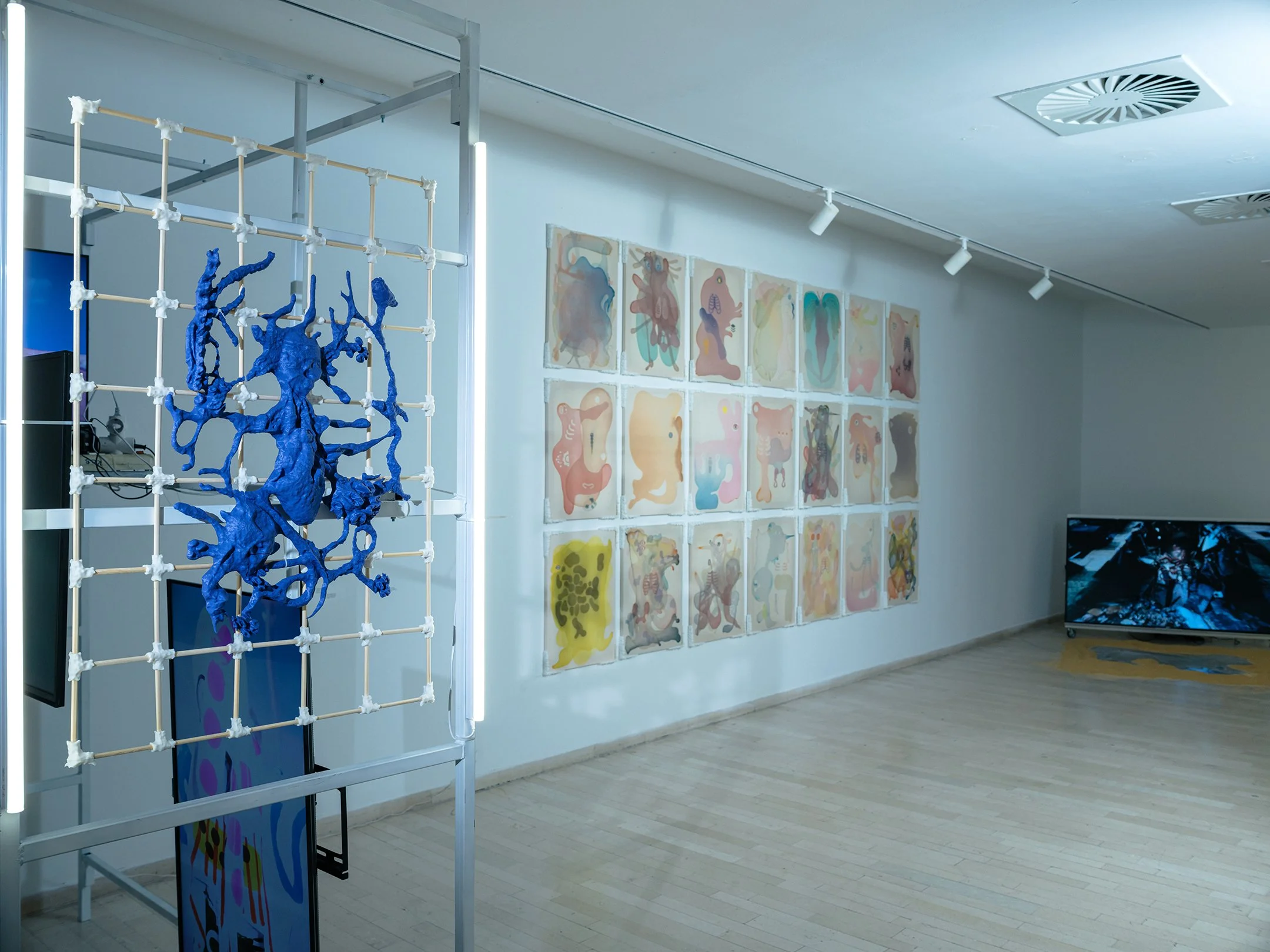
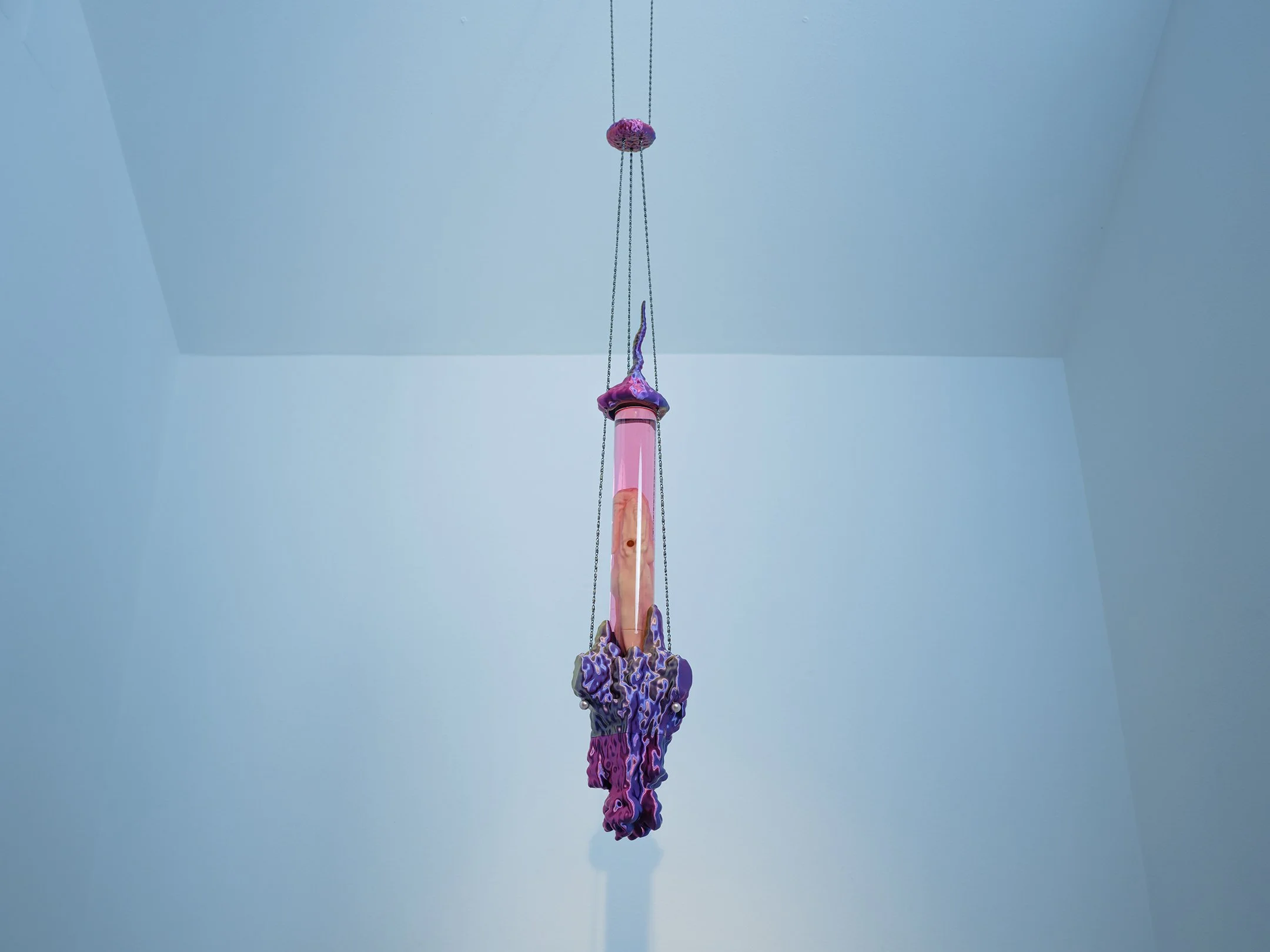
The Dream combines traditional drawing and digital world-building, bringing together elements of post-apocalyptic desolation and science fiction into a hybrid imaginarium. The exhibition presents a multi-layered world in which micro- and macro-perspectives, as well as organic forms and technology, merge into a complex transmedia narrative. Milan Antić’s fantastical story unfolds through several media-defined segments:
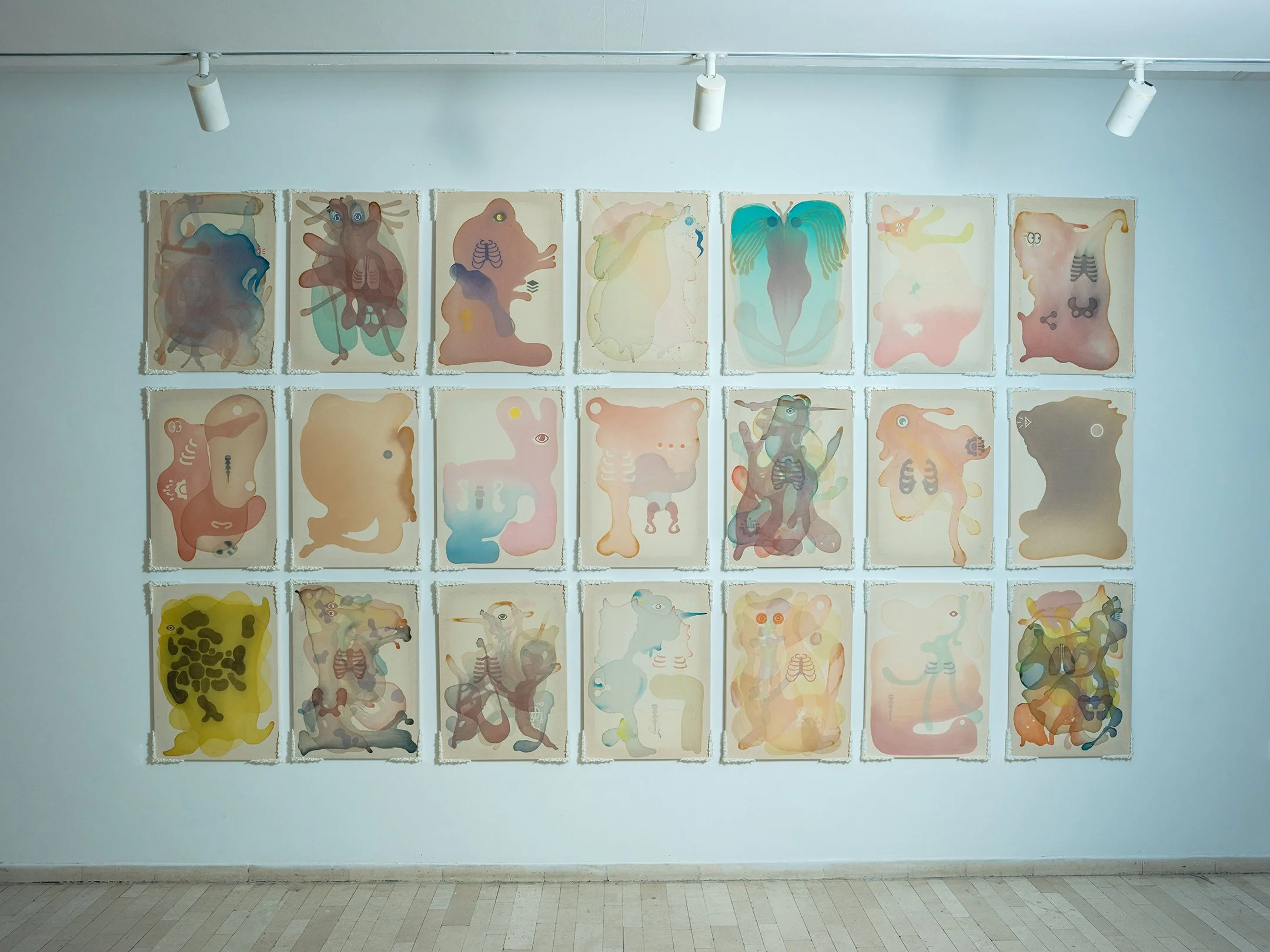
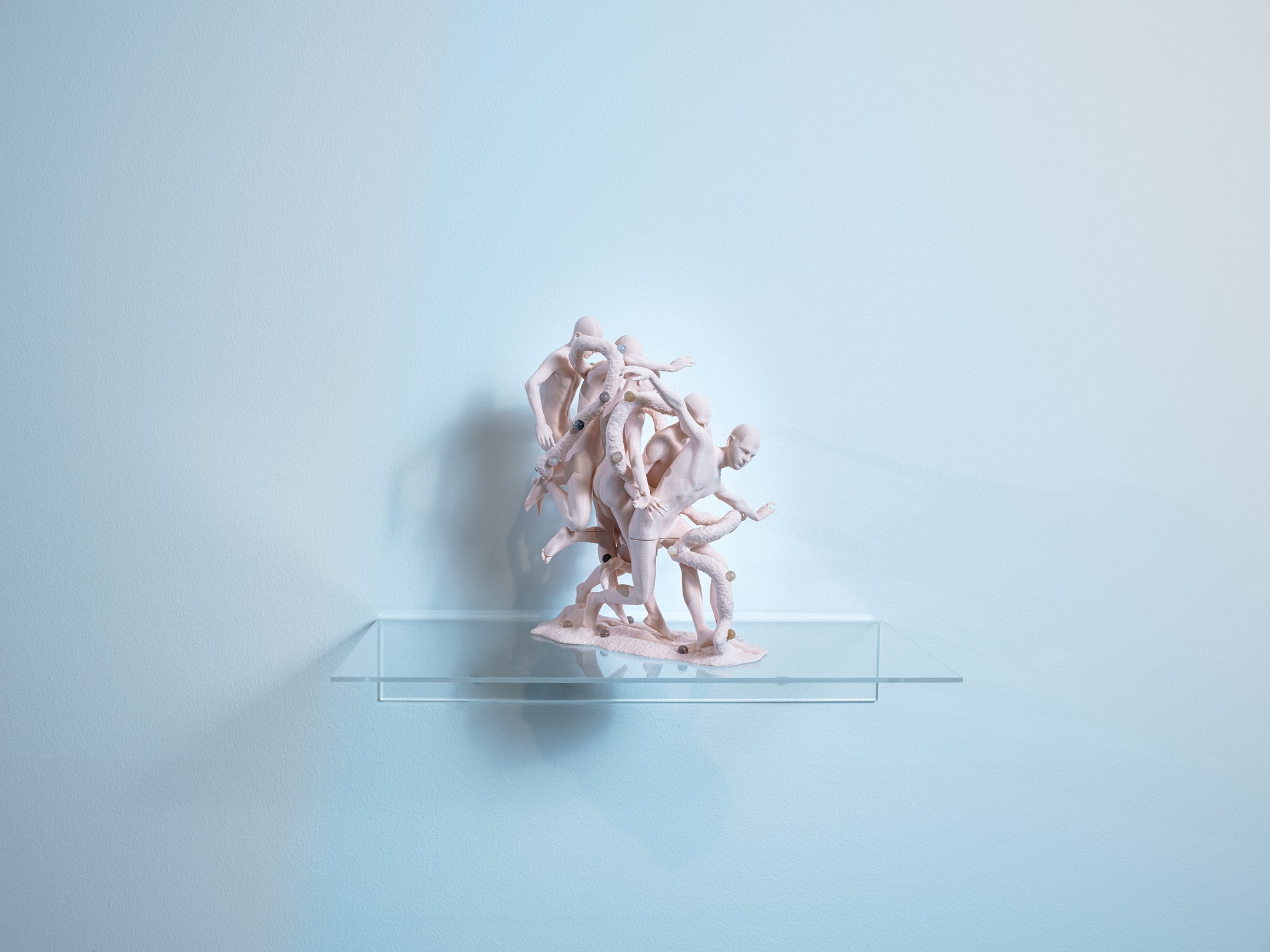
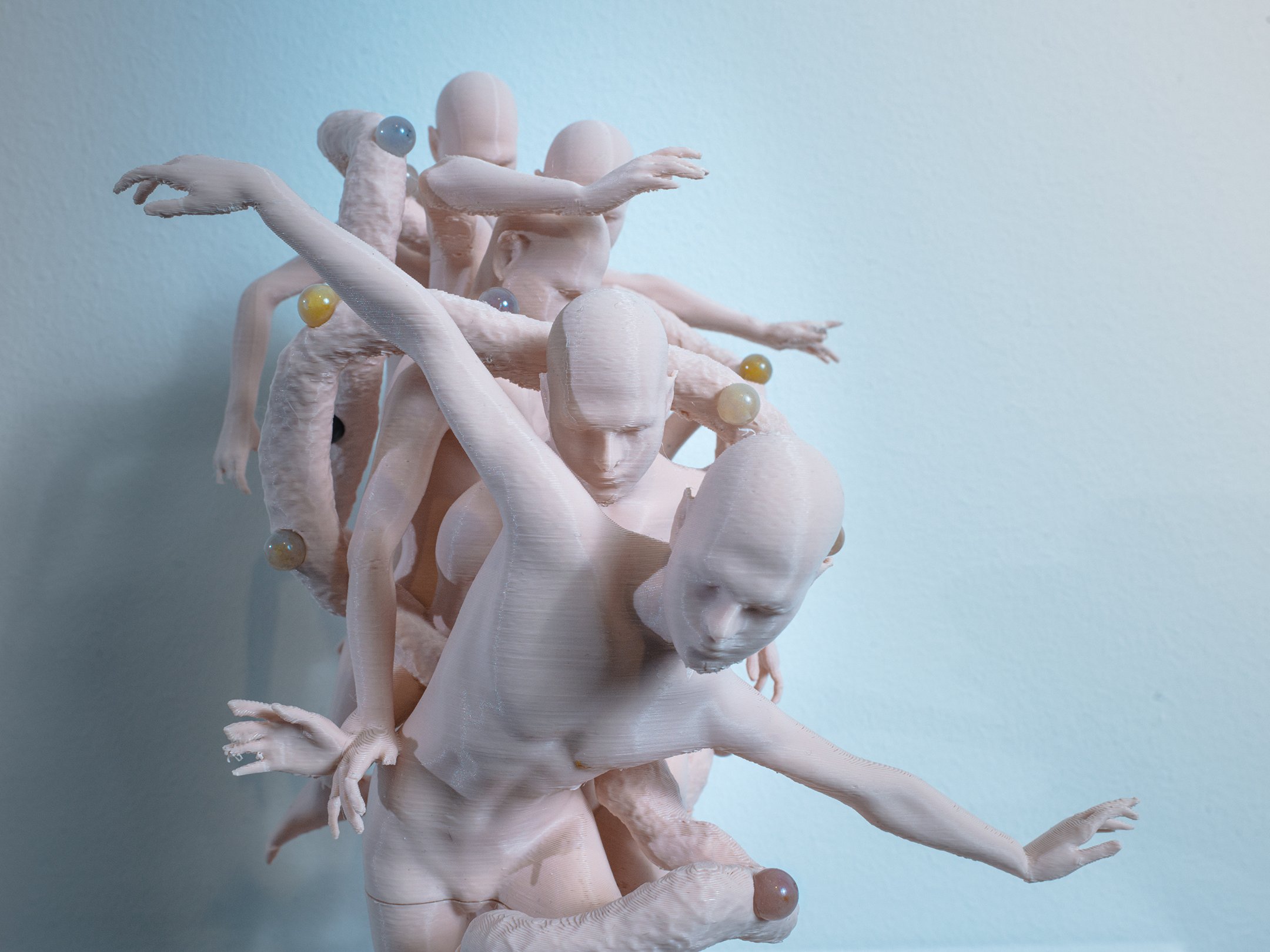
Bestijarijum (Bestiary), group drawings composition, 2025/2026
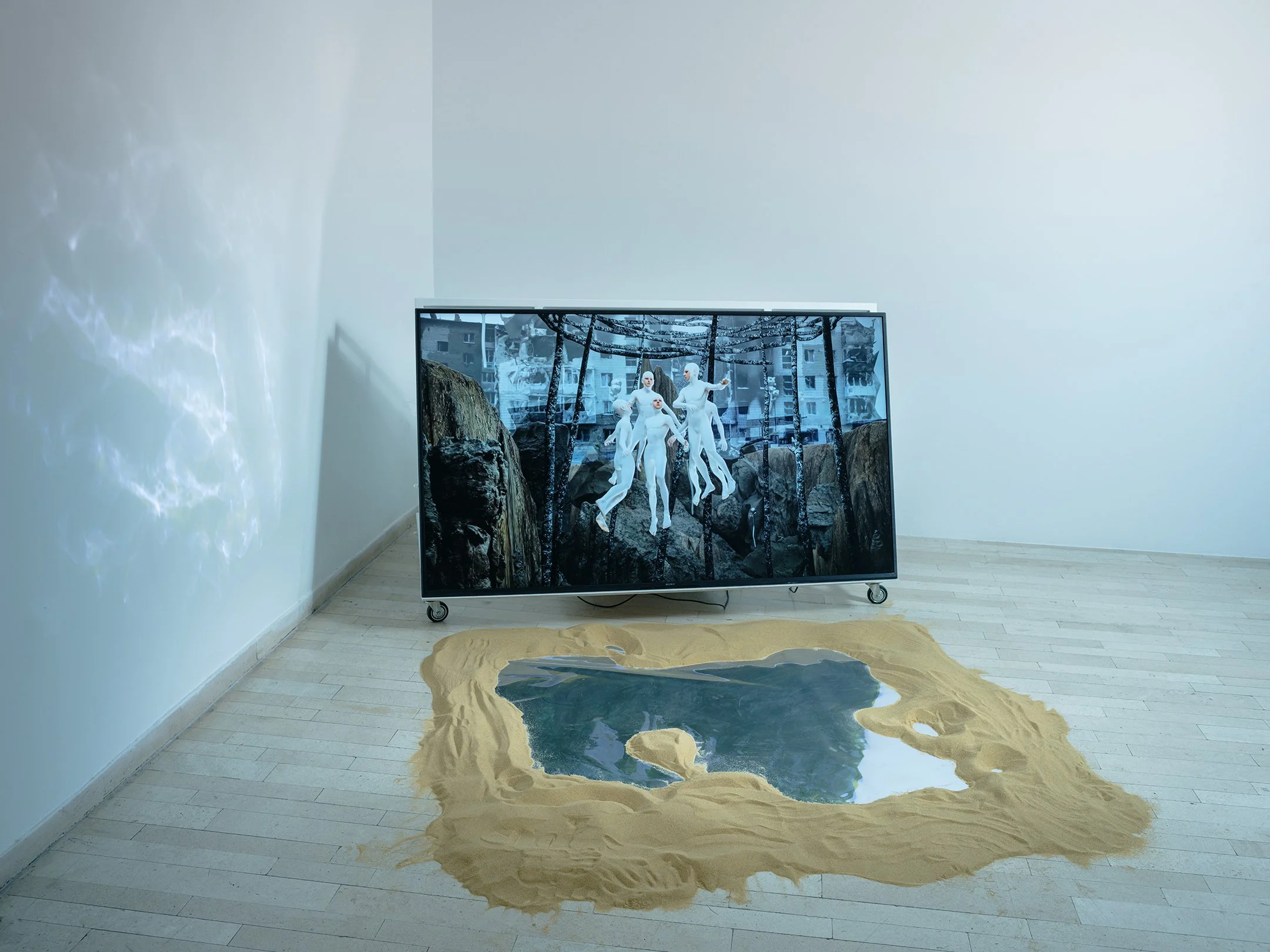
The Dream, three-channel video installation, loop, 2026
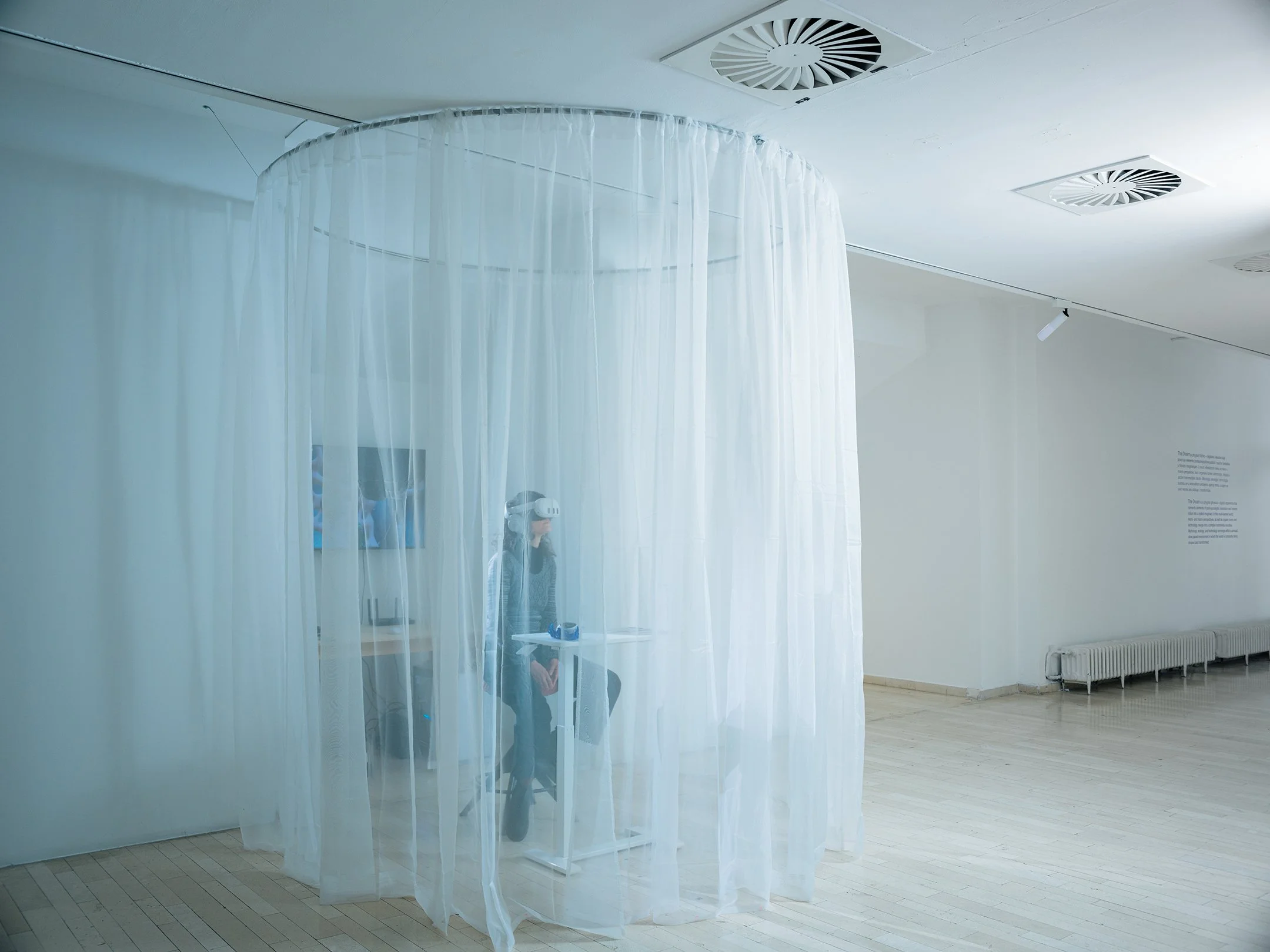
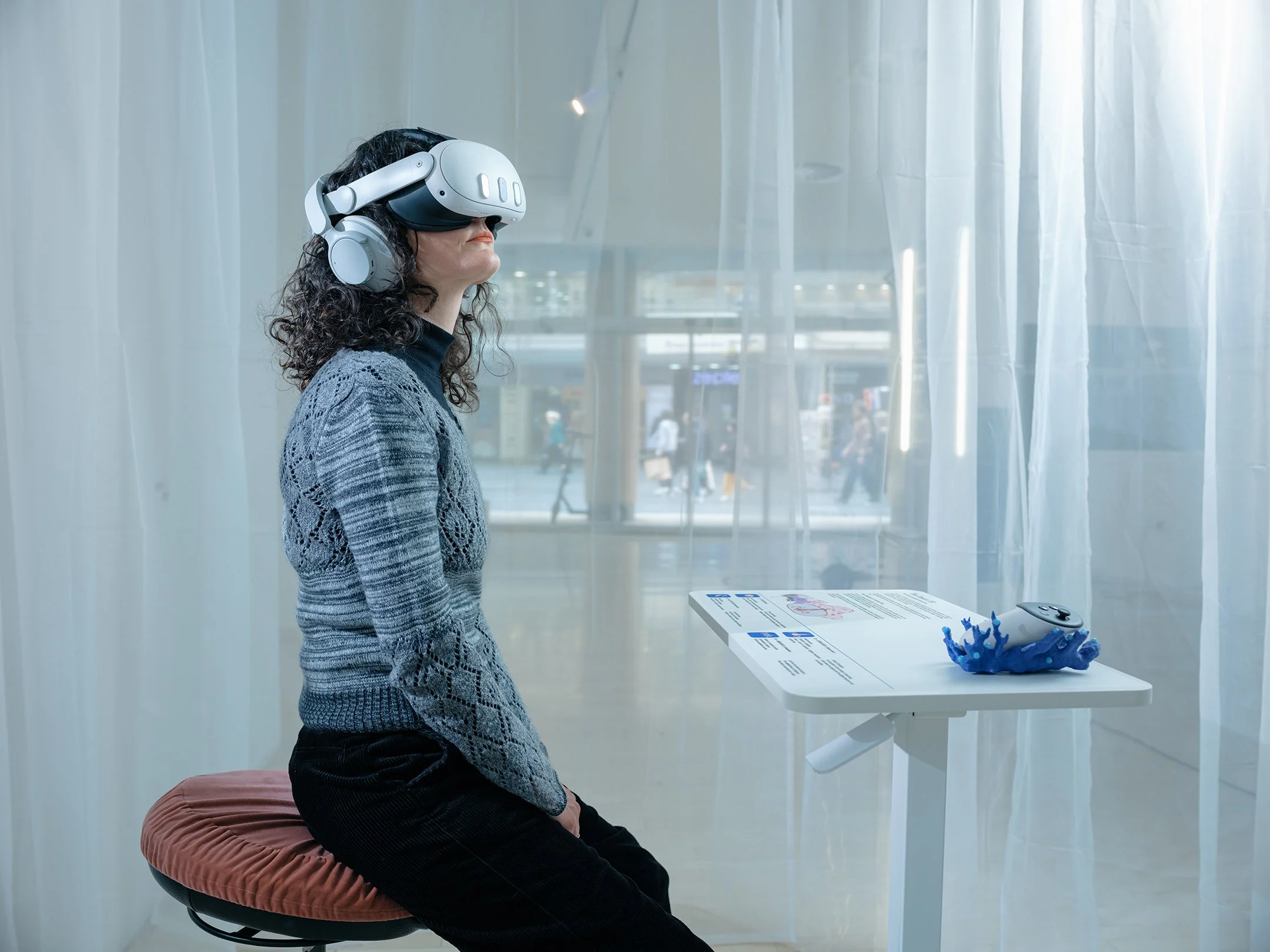
The Dream XR, VR work, 2026
Vestige: The Warm, single-channel video work, loop, 2025
The Dream of Technology: A Speculative Horizon between the Analogue and the Digital
In the novel Do Androids Dream of Electric Sheep?, Philip K. Dick interrogates the inner life of technology: can it dream, can it possess empathy? In a world where androids assume human patterns of perception and animals become electric replicas, the distinction between the living and the artificial lies not in intelligence, but in the capacity for imagination and feeling.
Milan Antić’s artistic practice seeks to visualize this hybrid existence: through a mode of fantasy that evokes both life and destruction, adhering to the idea of infinity. At the same time, his virtual space of slow rhythm becomes a place from which it is possible to envision — if not an alternative order, then at least a deviation from the existing one. This speculative line makes it possible to read The Dream as a distributed world, an ecosystem in which the tension between flora, fauna, the mythical being and its technologically mediated interpretations is articulated as a key driver of the narrative.
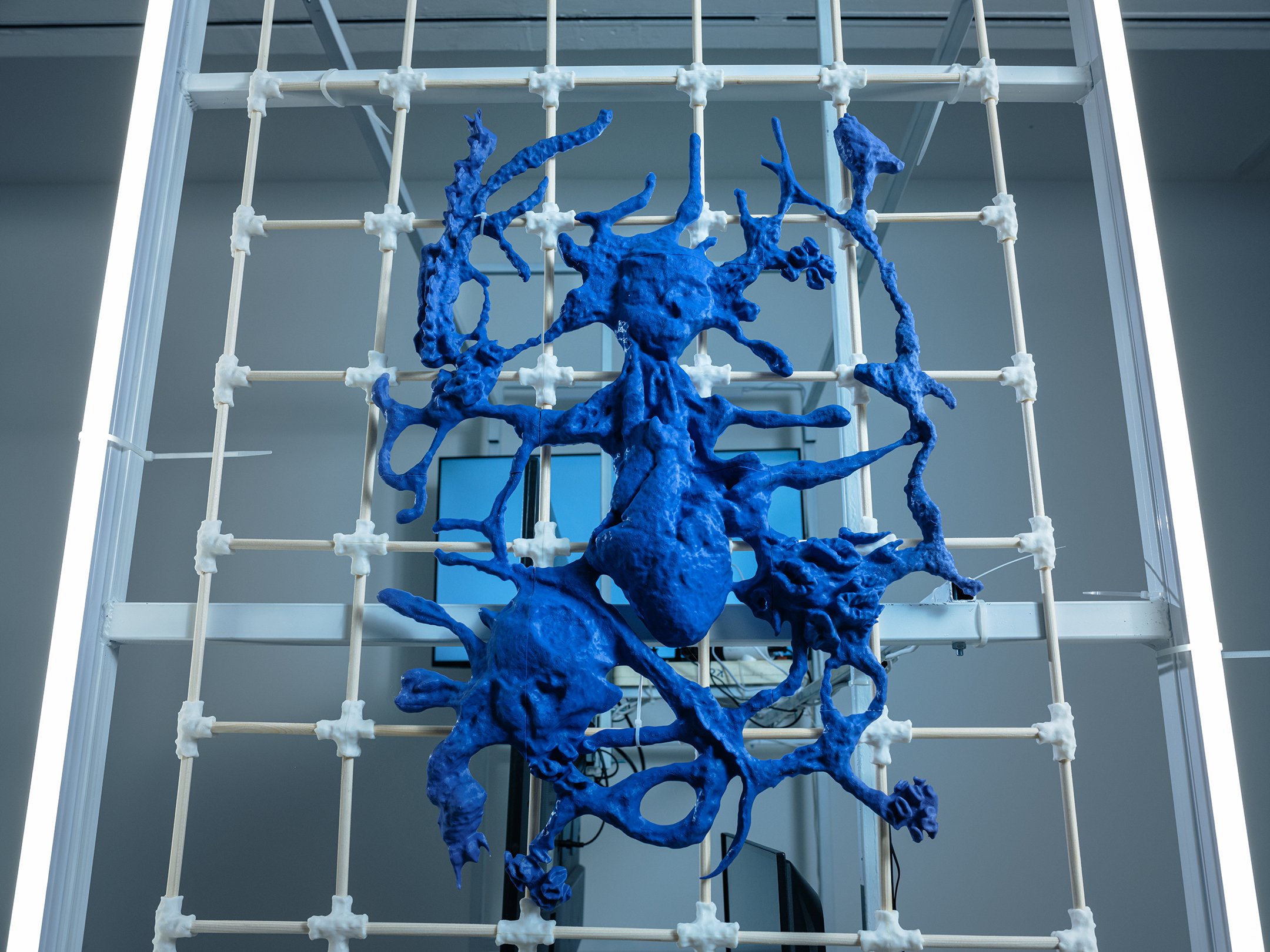
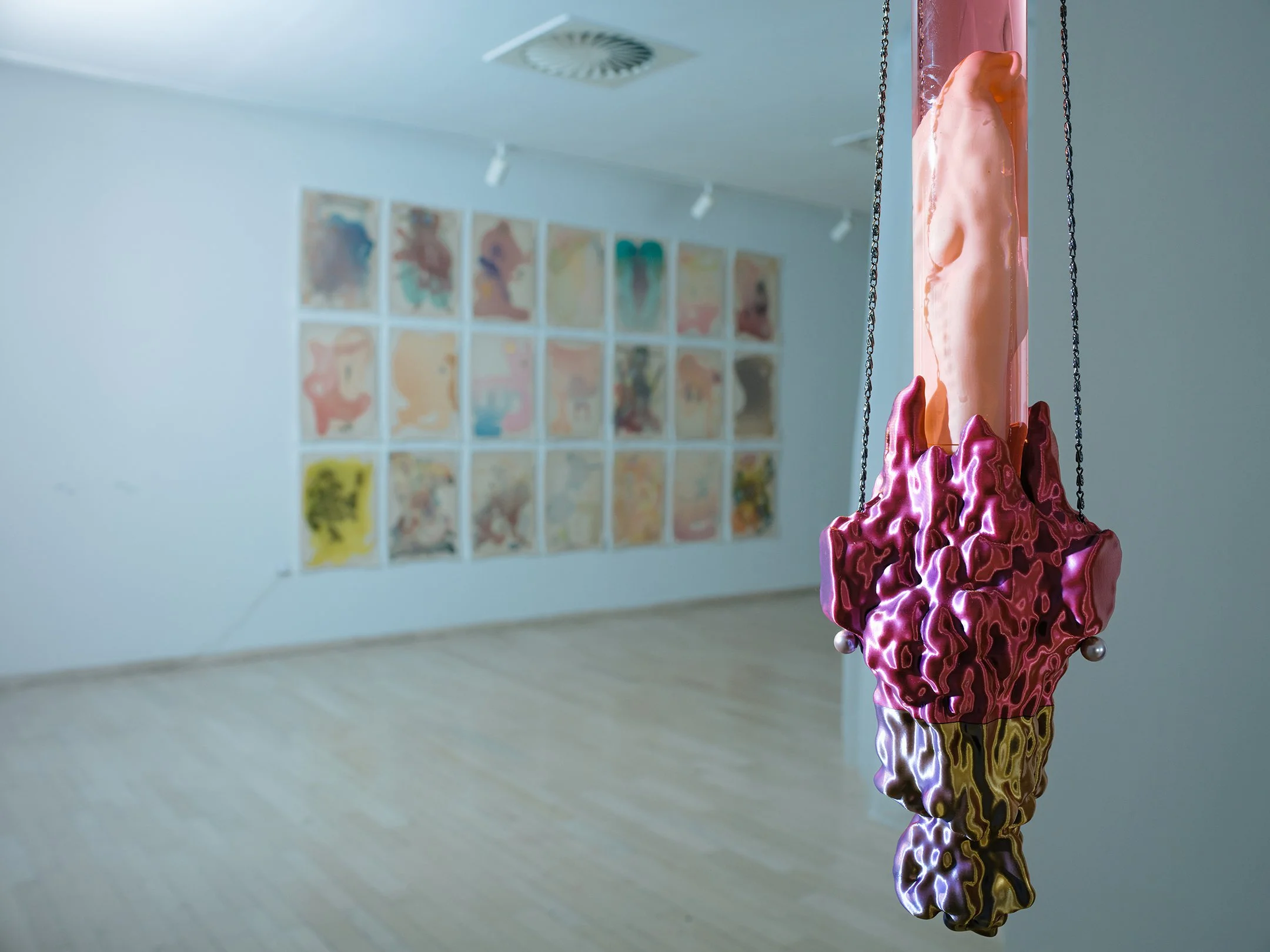
The analogue Bestiary is a series of drawings that functions as an archive of fantastical organisms, a kind of morphological atlas of an imaginary ecosystem, from which digital entities for the virtual space emerge. The drawings are marked by a pronounced materiality: pigment seeps into the fibres of the fabric, forming amorphous, organic shapes that Antić transforms into 3D forms. They become structural elements of the landscape, situated on the back of a mythical creature, across which avatars move, conceptually linking all segments of the dream into a broader network of relations.
The movement of the avatars is a slow-motion hybrid performance realized through motion-capture technology, inspired by Japanese butoh, the anti-dance of darkness. The avatars are dressed in layered structures of simultaneously beautiful and grotesque carnival costumes, while a bluish luminous ring hovers above their heads — a technological sensor, a hybrid of echolocation and machine intelligence.
Antić’s narrative generates a distinct contemplative atmosphere that dystopically subverts a technopositivist sensibility. His aesthetics is characterized by intense and shimmering colours, subtle neon accents, tactilely suggestive surfaces and diffuse, atmospheric lighting, which together create a hyper-stylized environment.
The visual language, 3D-modelled in Unreal Engine, draws, among other sources, on the final scenes of the anime Akira, as well as on Solaris by Andrei Tarkovsky and A Clockwork Orange by Stanley Kubrick. Alongside these references, the analogue drawings function as a matrix for digital modelling and rendering, establishing a circular relationship between the physical and the virtual. They invoke a logic of technoanimism, in which digital entities become active agents within a speculative ecosystem. Futuristic forms merge with fragments of past epochs, generating a multi-layered, ethereal environment.
The extended reality of The Dream is a series of landscapes inside the reproductive organs — uterus, fallopian tubes and ovaries — of a dominant mythical body. In order to bring the viewer closer to his perception, Antić employs a VR device, like a film experienced by the audience through a camera. The observer moves through liminal channels, passing from one microecosystem to another, all the way to the exterior of the mythical being, which does not function as a decorative element, but as the very reason for the existence of this concrete world-building.
The wide shot transforms the viewer’s perception, shifting it from the intimate and microscopic toward the mythical and the cosmic. Landscapes in the interior space, symbolizing reproductive organs, become places of potentiality and coordinates of a world in formation, while close-ups of the organs provoke fascination and invite reflection on fundamental questions of existence.
The boundary between the organic and the digital remains fluid, while VR functions as a tool that articulates these interdependencies, enabling the experience of a complex and evolving imaginarium, enveloped in an aura of existential mystery.
Somewhat darker in tone than the narrative of reproduction is the video Vestige: The Warm, through which Antić, by means of a continuous, unedited shot, introduces viewers to a speculative subterranean landscape imbued with the spirit of dark ecologies. The work points to the paradox of a digitized nature that is at once present and elusive, as well as to the inescapable connections between the human and the inanimate.
Within the space inhabited by abstract forms, precisely modelled insects and animals begin to emerge, their morphologies subtly altered, generating hybrid organisms that appear familiar and disturbingly alien at the same time. Surfaces and textures derived from the real animal world further complicate the perception of materiality, producing an ambivalent sense of seeing beings that are simultaneously organic and synthetic.
Into this mutating, dystopian environment, the artist introduces transformed fragments of collapsed buildings from the war in Ukraine, whose architectural remains appear as sedimented traces of contemporary violence embedded in an imaginary ecosystem. Released from their original function, these fragments become the topography of a new, unstable environment in which traces of human destruction merge with processes of transformation and regeneration.
Vestige: The Warm thus articulates a post-anthropocenic landscape, a world in which nature, technology and the historical residues of human destructiveness operate as interdependent elements within a hybrid, unpredictable network of existence. Damir Avdić, an alternative musician and artist, composed an original score, intensifying the tension between fascination and unease within the visual field. His work exposes the sombre dimensions of contemporary life and reveals its existential delusions.
With the exhibition The Dream, Milan Antić moves beyond the limits of the static image and enters the field of expanded digital space, exploring modalities of perception, memory and interaction enabled by tools such as Unreal Engine. Each element, from microorganisms and textures to the mythical entity and the luminous sensor, functions as an organic component of a world in constant evolution.
Technology, mythology and ecology converge within a sensuous environment of slower, contemplative dynamics, where the artistic experience gradually draws the viewer into a fragile vision of the mystery of creation and destruction.
Maja Ćirić
San / The Dream
Cultural Centre of Belgrade / Art Gallery_2026
Curated by Maja Ćirić